
UCAS 2026/27 application data provides clarity on expected recruitment outcomes, but the underlying picture is nuanced across the HE sector.
UCAS 2026/27 application data provides clarity on expected recruitment outcomes, but the underlying picture is nuanced across the HE sector.
Overall application numbers for 2026 entry increase by nearly 5%
Recent media coverage may suggest that the HE sector is facing broad-based recruitment headwinds. While longer term structural changes should not be understated and international recruitment challenges remain, the immediate UCAS data presents a more positive overall position. UK undergraduate applicant numbers continue to rise and the latest release shows applicant numbers reaching a new high, exceeding even the levels seen during the pandemic-era cycle in June 2022.
Numbers of applicants are up 4.6% from the June 2025 cycle, taking the total to 695,740.
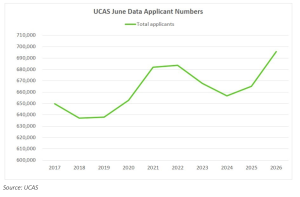
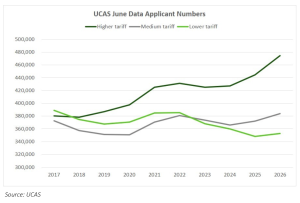
The breakdown of applications also reinforces a second long-running theme, illustrated in the graph below: demand continues to diverge by tariff group, with increasing numbers of applicants considering higher tariff providers.
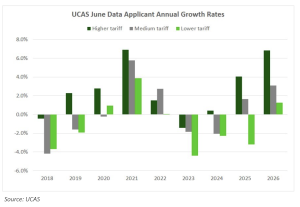
Higher tariff universities have seen 6.8% growth in applicant numbers from the same point in last year’s cycle. This pattern is no longer cyclical noise but a sustained feature of the market: in eight of the past nine years, application growth to higher tariff providers has outpaced that seen at either medium or lower tariff institutions:
From 2017, numbers of applicants to higher tariff institutions are now 25% higher, while medium tariff providers have seen just 3% growth and lower tariff providers have experienced a 9% reduction over the same period:
Subject area application changes emerging
There have always been shifts in the relative attractiveness of individual subject areas, but the latest data increasingly points to a more structural shift.
Over the past two years, applications to engineering and technology, mathematical sciences and vet science have consistently ranked among the top five areas for growth in application numbers. Law, and architecture building and planning also show strong growth in applications. Meanwhile, several course groupings including computing (-14.2% compared to 2024); language and area studies; and design and creative and performing arts, have recorded year-on-year declines in application numbers across the same period.
Institutions have already begun to adapt their academic offer in response and the alignment between course provision, student demand and graduate employment outcomes is likely to remain a central strategic issue for sector leaders. It is increasingly apparent that these changes reflect the graduate jobs market and the anticipated influence of AI. Institutions are demonstrating the need to be as agile in provision as their students are in consideration of course options.
Treasury and financing considerations
From QMPF’s perspective the application data matters; in the context of refinancing, new borrowing and the assessment of lending to support student accommodation development, confidence in student number forecasts remains fundamental. Although there is currently heightened focus on international recruitment, reflecting both its income contribution and potential volatility, domestic undergraduate recruitment continues to underpin the core fee base of many institutions. Given the data emerging, we also anticipate increased lender focus on relevance of course offering as shifts in graduate jobs markets emerge.
QMPF will continue to monitor the sector outcomes through the clearing process, ready to be able to present a complete and rounded picture of University forecasts and performance in support of financing options appraisals and interaction with lenders. In the current funding market robust, data driven treasury advice and analysis remains key to institutions successfully and efficiently raising funding.
More News…
Contacts
Graeme Tough
graeme.tough@qmpf.co.uk